Category: Home Setup & Essentials

  • The Budget Smart Home Blueprint: Automate Your Home in India Without Breaking the Bank 

    The Budget Smart Home Blueprint: Automate Your Home in India Without Breaking the Bank 

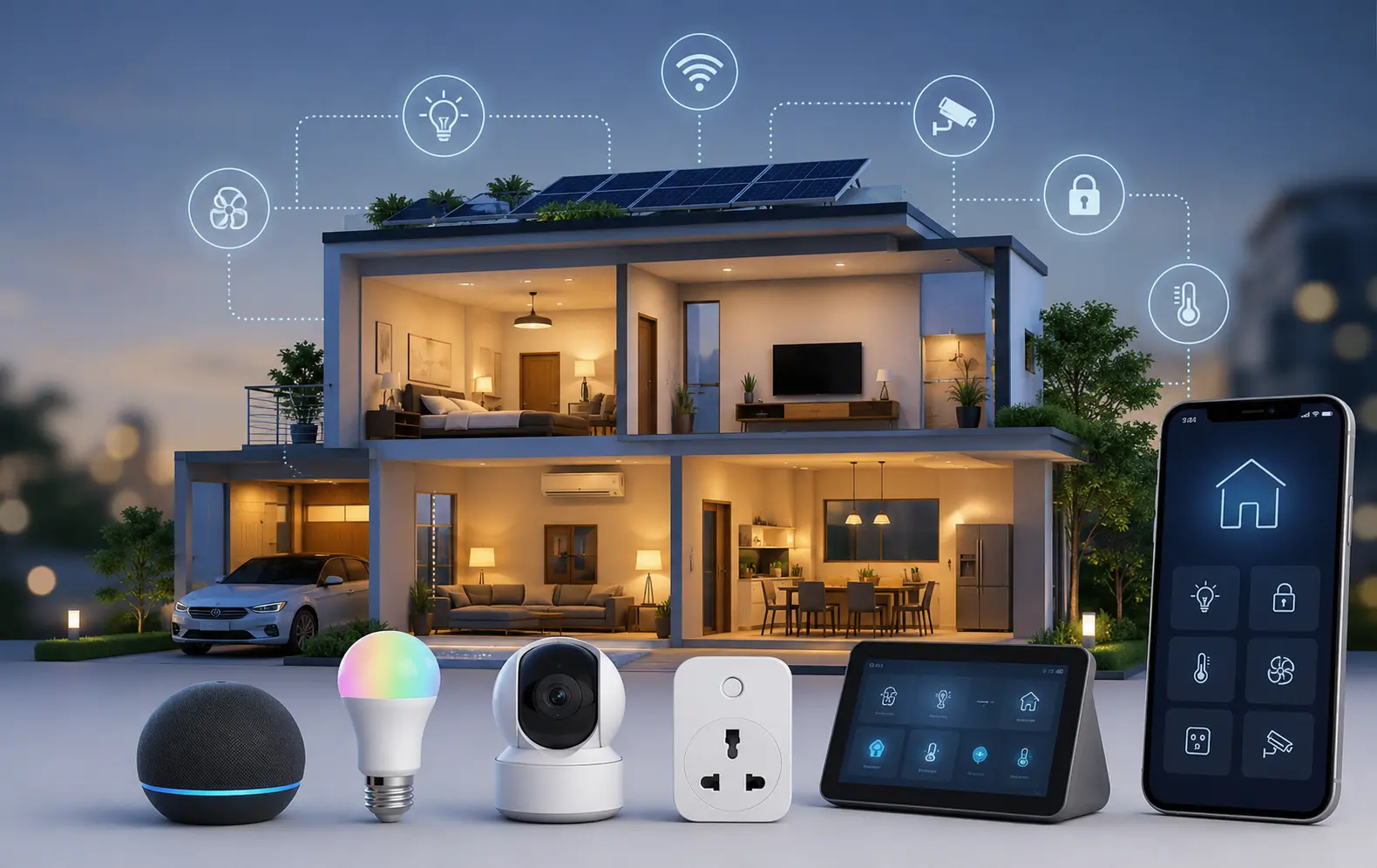
    In India, you can set up authentic smart home automation for as low as ₹3,000 through a stepwise upgrade process: start with smart plugs and light bulbs, then add voice assistants, and finally add security and climate control systems. One of the main reasons people spend more than they should is purchasing an all-in-one “starter kit” without understanding their actual requirements. 

    Conventionally viewed as something that cool kids do, smart homes are no longer reserved for rich people’s enjoyment. Voice-controlled lighting systems, smartphone-controlled security cameras, and air conditioners that know when to switch themselves on or off are the norm in the typical Delhi NCR household today.

    The problem is that the market is flooded with equally “fancy” smart home “kits” that are asking exorbitant prices, which means that most people end up paying for things they will never end up using. 

    Here’s a guide that will help you avoid paying extra for smart home automation. 

    Why Smart Home Automation in India Got Cheap (Finally)?

    Three things changed the math: 

    • Matter compatibility – A new industry standard that lets devices from different brands talk to each other, so you’re no longer locked into one expensive ecosystem. 
    • Local manufacturing – Indian brands now build smart plugs, bulbs, and switches at a fraction of import prices. 
    • Retail competition – Festive and Independence Day sale windows regularly cut 30-40% off entry-level smart home appliances. 
    • Translation: In other words, you don’t need to spend ₹50,000 on a “convenient package” to get a smart home. What you need is just a plan 

    The 3-Tier Budget Blueprint 

    Stop labeling a “smart home” project as a single purchase. It’s an upgrade project with three tiers. 

    Tier 1 — Beginner (₹2,000 – ₹5,000) 

    This is the least expensive way of entering the market, but the most beneficial. 

    • 2-3 smart switches (you will be able to operate any appliance — fan, lamp, geyser — with the help of your phone); 
    • 1 smart bulb for the main area; 
    • The smart switch will convert the ordinary appliance into a smart device. 

    This tier enables people to control the home with their voices and apps. 

    Tier 2 — Smart Living (₹10,000 – ₹18,000) 

    In this tier, people can acquire a voice speaker, a video doorbell, or an indoor camera. You will see that the house will start being automated (due to creating such a routine as “Good Night”) after reaching this tier. 

    Tier 3 — Full Automation (₹30,000+) 

    Here, people acquire smart air conditioning and vacuuming systems. It makes sense to reach this tier only when you know how to automate your home properly. In fact, most people skip this tier completely because of not understand the value of this point. 

    5 Rules to Avoid Overspending 

    1. Buying devices that function on the basis of Matter technology will save you from purchasing a new product in case of changing brands. 

    2. Start by buying light applications instead of spending a lot of money on changing the appliance for a smart one. 

    3. Buy major appliances during holiday sales. 

    4. Before purchasing, make sure to check for installation and service support. An intelligent AC or geyser with no installation guarantees is more of a liability than an asset. 

    5. Unless you are going with a Tier 3 upgrade, avoid gadgets that require a hub. Most Tier 1 or 2 gadgets connect via Wi-Fi. 

    Buying Smart Home Appliances in Delhi NCR – What Actually Matters? 

    The web is good for buying cheap products like smart plugs, but it becomes risky when one seeks professional installation of pricey gadgets like smart ACs and geysers because claims and installation become harder to execute without local service centers. 

    Rakesh Retails offers budget-friendly gadgets in addition to full-size appliances in its stores across Delhi NCR with authorized installations and EMI options for bigger purchases, so your Tier 3 upgrade is stress-free. 

    It is time to start your Tier 1 upgrade or go for a smart AC purchase. Check Rakesh Retails for appliance ideas or visit one of their stores to get hands-on experience with installations. 
  • Before You Buy: The Smart Shopper’s Home Appliances Checklist

    Before You Buy: The Smart Shopper’s Home Appliances Checklist

    For most consumers, the acquisition of a refrigerator or washing machine is as easy as purchasing a T-shirt. They spot a good price, check one specification, and make a payment. But the appliance will be used for eight to twelve years, and every carelessness made will manifest itself on the electricity bill, service call, or “why on earth didn’t I check this” moment.  

    However, making smarter buying decisions only requires fifteen minutes of your time beforehand to compare what might sound like the most generic tip ever received by a consumer, continued in the text below.  

    Are You Buying for Your Actual Household, or an Imagined One? 

    Ensure the capacity fits actual needs and not dreams. A 7-kg washing machine purchased for a family of two will run half-empty every time, and a 190-liter refrigerator purchased for a family of five will call for a grocery trip once in three days.

    Before considering different models, make a list of how many people are in your family, how often you cook, and how much food you store. This simple step will save you a lot of remorse afterwards about the ill-chosen appliance.  

    Does the BEE Star Rating Actually Change Anything? 

    They do, and even more so over the years of using an appliance. Changes made by the Bureau of Energy Efficiency in the star classifications of appliances mean that an appliance with five stars is more likely to save you energy than a three-star appliance from the same brand, as the difference in BEE standards of testing is compelling. 

    Although the purchase price of a 5-star appliance is higher, the lower running costs, especially for daily-use appliances such as air conditioners, refrigerators, and washing machines, make it worth the investment in a few years. So, check the ratings mentioned on the website, not only the brand name.

    Will It Physically Fit Your Home? 

    Make sure to take your measurements before you start liking the appliance. For example, check if you have enough door clearance for your refrigerator, check the depth of the window air conditioner bracket, and consider the space at the back of the washer for plumbing amidst any other specifications you might be missing. While buying your appliance online, check the product’s dimensions against your requirements at home, not with your guesses. 

    Is There Real Service Support Where You Live? 

    A good appliance needs access to service options if you do not want to face problems in the future. Therefore, it is vital to check if the brand offers service in your city before making the purchase. This is especially important for large electrical items because they need installation and follow-ups, which become problematic without the right people.

    What’s the Real Price, Not the Sticker Price? 

    Consider your installation expenses, EMI costs, and exchanges before making a comparison. A split AC that is advertised at ₹3000 less than its competitors can actually be more expensive. Similarly, it is also important to watch out for hidden charges associated with a no-cost EMI and exchange policies regarding your old appliance. 

    What Does the Warranty Actually Cover? 

    When it comes to appliances, most warranty programs only apply key components rather than the whole unit. For instance, a washing machine advertised as having a “10-year warranty” only offers a 10-year warranty on the motor and nothing else, which is often limited to 1 or 2 years. Make sure to read the details of the warranty when making your purchase decision, since a long warranty term may not necessarily mean a good deal. For instance, a store provides a free first service/first demo with a purchase that allows customers to get acquainted with the product and catch potential manufacturing defects earlier. 

    Online, In-Store, or Both? 

    The smartest consumers do both: conduct online research and confirm the findings in brick-and-mortar stores. Doing the research online is by far the fastest way to compare features and prices, but buying an appliance is a tactile experience: you would want to open the fridge, open the washing machine, and feel the remote control of the TV set. If you know a store that combines both a regular showroom and an online store with the same prices and stock, you can take advantage of both channels. The downside of many ordinary electronic stores is that they operate online only.  
     

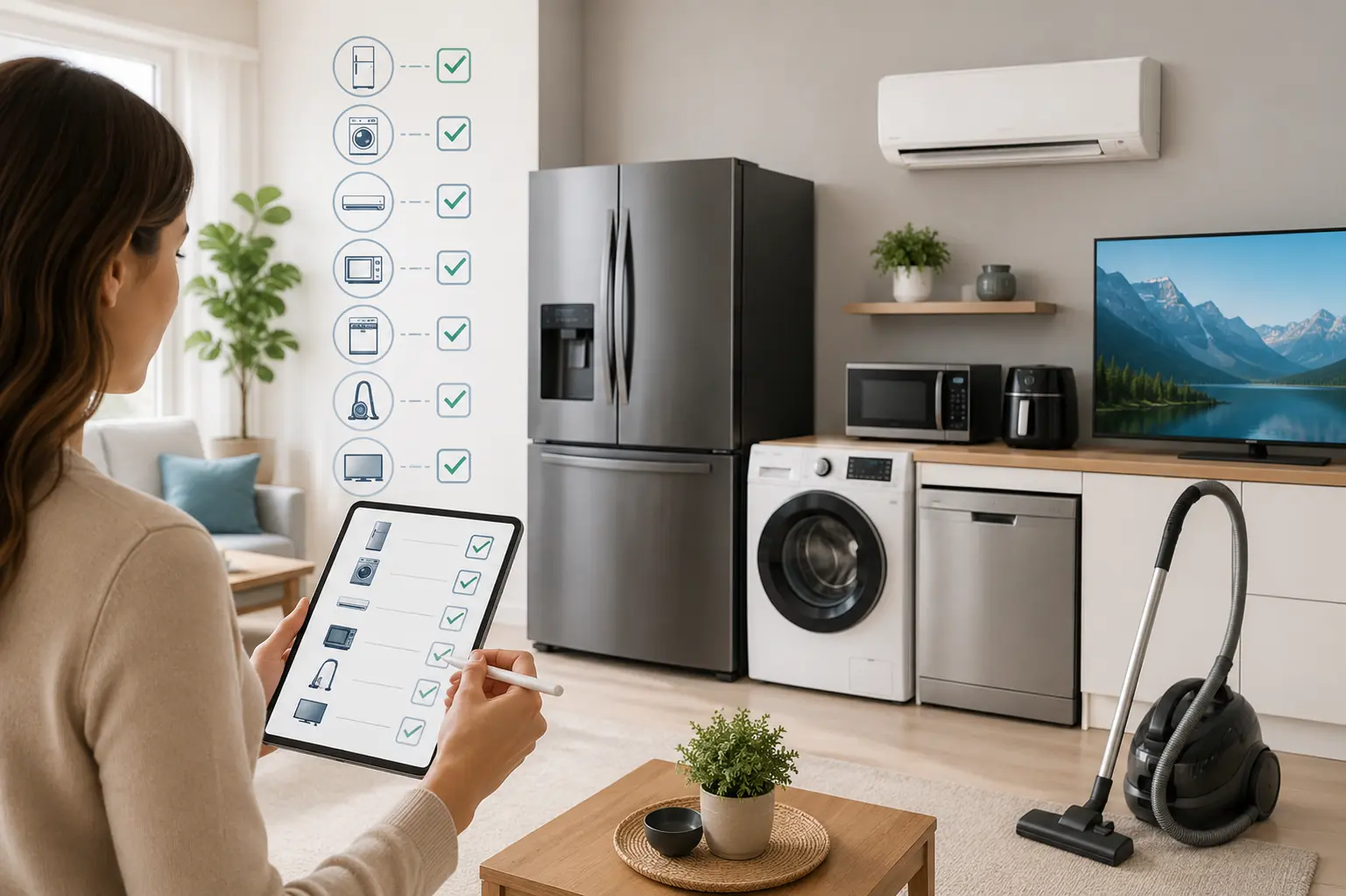
    The Checklist, In One Place 

    Before you check out, confirm you’ve covered: 

    • Usage: Match the capacity to your actual needs and not dreams. 
    • BEE: Consider how often you will be using the appliance. 
    • Size measurements: Ensure you measure the appliance dimensions and your space as well. 
    • Service Center: Confirm that the appliance you are buying is within the reach of the service center and not just indicate your state as a whole. 
    • Final price: Ensure you take into account all the associated costs, including installation, EMI, and exchange payments. 
    • Warranty: Be aware of what the warranty entails and for how long.  
    • Purchase method: Confirm that you buy your appliance through a store that has both online and offline representation. 

    Where This Gets Easier 

    This is precisely the gap that Rakesh Retails had identified as its opportunity to fill as an exceptional electronics and home appliances retailer in Delhi NCR: physical stores offering you the chance to try out the product by seeing it, taking measurements, opening the refrigerator door to check for yourself one model while comparing it to another one already present in the store, supported by the online store with genuine BEE certified products at similar prices.

    All products come with a manufacturer’s warranty, which in the case of most electrical appliances, includes free installation as well as easy EMI options available at checkout. 

  • Building Your Dream Home? A Complete Electronics Checklist    

    Building Your Dream Home? A Complete Electronics Checklist    

    Moving into a new home presents an unanticipated challenge: the empty rooms, the vacant walls, and the lack of functioning appliances. A home electronics checklist comes in handy to avoid frantic shopping trips through various stores on the day of the move. Here is a room-by-room breakdown of what to purchase, why the items are important, and how to avoid overspending in Delhi NCR! 

    Why a Checklist Beats Impulse Shopping

    Shopping by room instead of by store saves money and prevents the need for multiple trips. Purchasing a fridge without prior assessment of where the power socket is located, or a chimney without knowing the size of the stove, can result in an exchange or alteration of wiring later. Planning your purchase room-by-room and determining how much energy each item uses is the key!

    Kitchen: The First Room to Wire

    • Refrigerator – It should be chosen according to the number of people living in the house, as 200-300L is usually enough for 2-3 people, while families of 4 and more need at least 400L.  
    • Chimney and stove – Chimney width should match stove size (either 60cm or 90cm). Leaving the chimney too small causes grease accumulation for months.  
    • Microwave or OTG – A 20-25L microwave capacity will be enough for heating food, while convection microwaves can also be used for baking. 
    • Water filter – It should be an RO+UV type if you live in Delhi NCR because groundwater TDS in the area is high, but make sure to check the TDS in your area before purchasing the filter.  
    • Mixer grinder and electric stove – These tools will come in handy during gas delays and in homes without gas connections. 

    Living Room: Entertainment and Comfort 

    • TV set – 43-inch screen for spaces under 120 square feet; 55-inch or larger for larger spaces. It’s obligatory to keep the distance to the screen checked (approximately 1.5 times the size of the screen in feet). 
    • Air conditioner – 1-ton for space less than or equal to 120 square feet, 1.5-ton for space up to 180 square feet; inverter air conditioners are more expensive as an initial investment, but they reduce summer electricity costs in Delhi by 20-30%. 
    • Soundbar or home theatre – Not necessary, but recommended. 
    • Wi-Fi router – Should be installed in a place not far from the rooms. 

    Bedroom Items

    • Air conditioning system (split or window unit) – While the installation of window units is cheaper and requires external wall space for units of split type, it is more appropriate for rooms with ultramodern architecture. 
    • Ceiling fan (BLDC motor) – Consumes only around 28W instead of a normal 75W. 
    • Water heater/geyser – The best choice is a 15-25L geyser for the bathroom with one sink; instant geysers are needed when only a few people use the bathroom. 

    Power Back-up Equipment 

    • Inverter system with a battery – A 1500VA inverter set with a tubular battery can operate fans, lights, and the television for 3-4 hours during a power cut. 
    • Voltage stabilizer – Protects the air conditioner and refrigerator from voltage fluctuations in NCR. 
    • UPS for home office – A small UPS is enough for routers’ and laptops’ functioning during short power cuts. 

    Safety and Smart Additions 

    • Smoke alarm – Rather cheap equipment, usually neglected but actually important, especially if there is an LPG pipe connection in the house. 
    • Smart socket and doorbell with camera – Excellent option for making your house look safer and easier for people who are approaching you while you’re away. 
    • Power strips with surge protection – A good investment; 2-3 more power strips should be purchased since your new house will not have enough sockets. 

    Where to Buy: Best Electronics Store in Delhi NCR

    Delhi NCR offers three practical routes for sourcing this checklist: 

    1. Top electronic chain stores (Rakesh Retails, Vijay Sales, Reliance Digital) – Common prices, good service once you purchase more expensive items such as an AC or refrigerator.  

    2. Wholesale markets (Nehru Place, Karol Bagh’s Ghaffar Market, Wazirpur Market) – Good prices on some items; however, warranty service differs from one outlet to another. 

    3. Local stores – Make faster acquisitions, particularly with items that do not require a market trip. 

    To save time, it is recommended to purchase expensive items from authorized retailers for proper warranty service and buy cheaper equipment from a trustworthy local store. 

    A Quick Buying Sequence 

    1. Verify electrical plans and the number of sockets available. 

    2. Reserve the essential appliances 2–3 weeks before moving in; installation slots are quite busy during the holiday season. 

    3. Order a backup power source (inverter, stabilizer, etc.) as early as possible, as it takes a day to install and should be completed well before using appliances. 

    4. Purchase the necessary smaller items for extension cords, smoke alarms, smart plugs in the days preceding move-in. 

    Making a shopping list for your move-in? Begin with the expensive appliances, purchase a warranty with an authorized seller, and finally fill out the rest of your list with a reliable local electronics store.