Category: Home Appliances

  • Geyser Buying Guide: How to Choose the Right Water Heater for Your Home

    Geyser Buying Guide: How to Choose the Right Water Heater for Your Home

    Purchasing a geyser involves three important factors: capacity (10-15 liters when used in single bathrooms, 25 liters or higher for family homes), geyser type (instant geyser for quick filling, storage geyser for constant hot water, or heat pump geyser to save on electricity bill), and safety certification (always look for an ISI mark and an auto switch-off feature). You can easily figure out the right geyser for you by checking the three features according to your household size and its hot water usage. 

    Why Picking the Right Geyser Actually Matters 

    Typically, people don’t realize that the geyser on the showroom floor is not the geyser they need for their homes. The price can be very low, and purchasing a cheap geyser will allow you to worry less about the supply of hot water during the winter months. However, if a person purchases a geyser that is too big for their home, they will have to heat more water than they really need. A buying guide on geysers is not about brands – instead, it is about choosing the device according to your specific lifestyle, bathroom conditions, and the size of your electricity bill. 

    It is important to remember that geysers are not “buy and forget” products. Such a device is installed on the wall and has performed its functions for years. Therefore, it is critically important to choose correctly to save money for years. 

    Storage vs Instant vs Heat Pump: Which Type Fits You? 

    This is the initial choice to make which influences nearly everything else. 

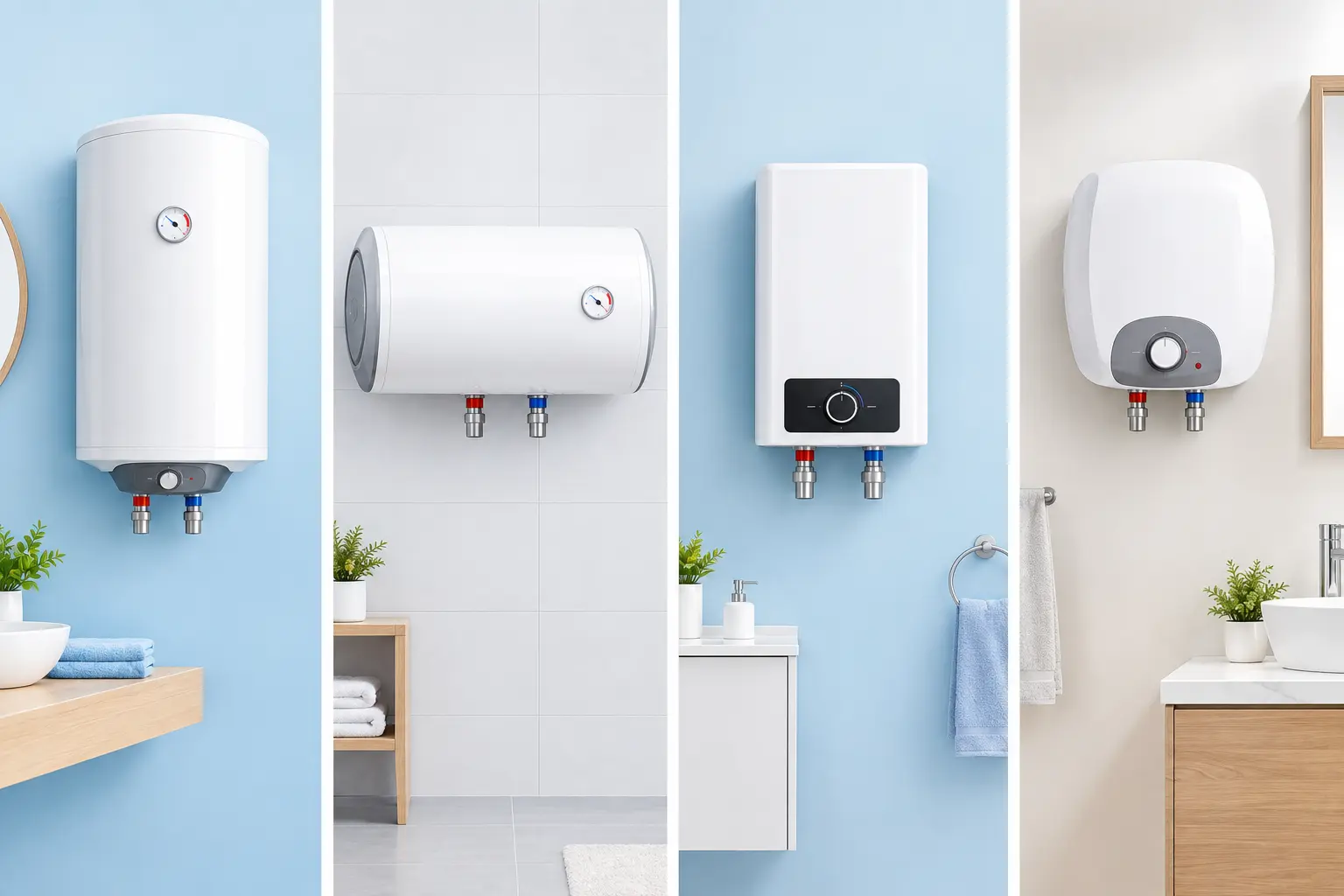
    Storage geysers – Storage geysers maintain and heat some water in the tank, which provides hot water on demand. They are good for large families or houses with many bathrooms, or if you need a constant supply. 
    The con of it is standby heat loss and re-heating even when you don’t use it. 

    Instant geysers – Instant geysers heat the water as they are required and are small. They work very quickly, which makes them good for single flats and places with unstable electricity. However, they have limitations because of the flow rate. 

    Heat pump water heaters – Heat pumps extract heat from ambient air. The initial investment is high, but the amount of energy used for water heating decreases significantly when used for a long period of time.

    How to Calculate the Right Capacity 

    No need to guess when you can use this simple formula: 

    • One person living in one bathroom needs a geyser of 6 to10 liters. 
    • 2-3 people using one bathroom need 15 liters of storage geyser. 
    • 4-5 people living in one or two bathrooms require 25 liters of storage units. 
    • A big family or people living in several bathrooms need 35 liters of unit or two different units. 

    In the case of using buckets instead of showers, you may buy a unit of smaller size. Conversely, shower fans can choose the bigger one. 
     

    Features Worth Paying Extra For

    Not every feature warrants an extra cost, but there are a select few that stand out:  

    • Auto-cutoff/thermostat control – Temperature regulation that does not fry the device or keeps it on standby. 
    • Glass-lined or titanium tank coating – Resistant to corrosion, most relevant for hard water. 
    • Pressure release valve – One of the more basic safety features that shouldn’t be ignored. 
    • 5-star BEE rating – Directly results in lower monthly electricity bills. 

    Fancy app connectivity or voice control is cute but dispensable. Give safety and efficiency features the necessary premiums first. 
     

    People Also Ask: Fast Answers

    How long does a geyser last?  

    Most geysers work well for 8-10 years with basic maintenance like de-scaling once in 2-3 years. 

    Is a 15-litre geyser enough for a family?  

    Yes, for a family of two or three with a low to moderate usage level. For larger families or shower-heavy households, consider going with 25L. 

    Which uses less electricity, an instant geyser or a storage geyser?  

    Instant geysers consume less electricity as they heat up only the quantity needed; however, storage geysers are more convenient for continuous hot water demand. 

    Is a heat pump geyser worth the extra cost?

    If your house consumes a lot of hot water on a daily basis, then generally long-term electricity savings will justify the extra upfront costs within a few years. 
  • How IoT Is Changing TVs, ACs, Refrigerators and Washing Machines 

    How IoT Is Changing TVs, ACs, Refrigerators and Washing Machines 

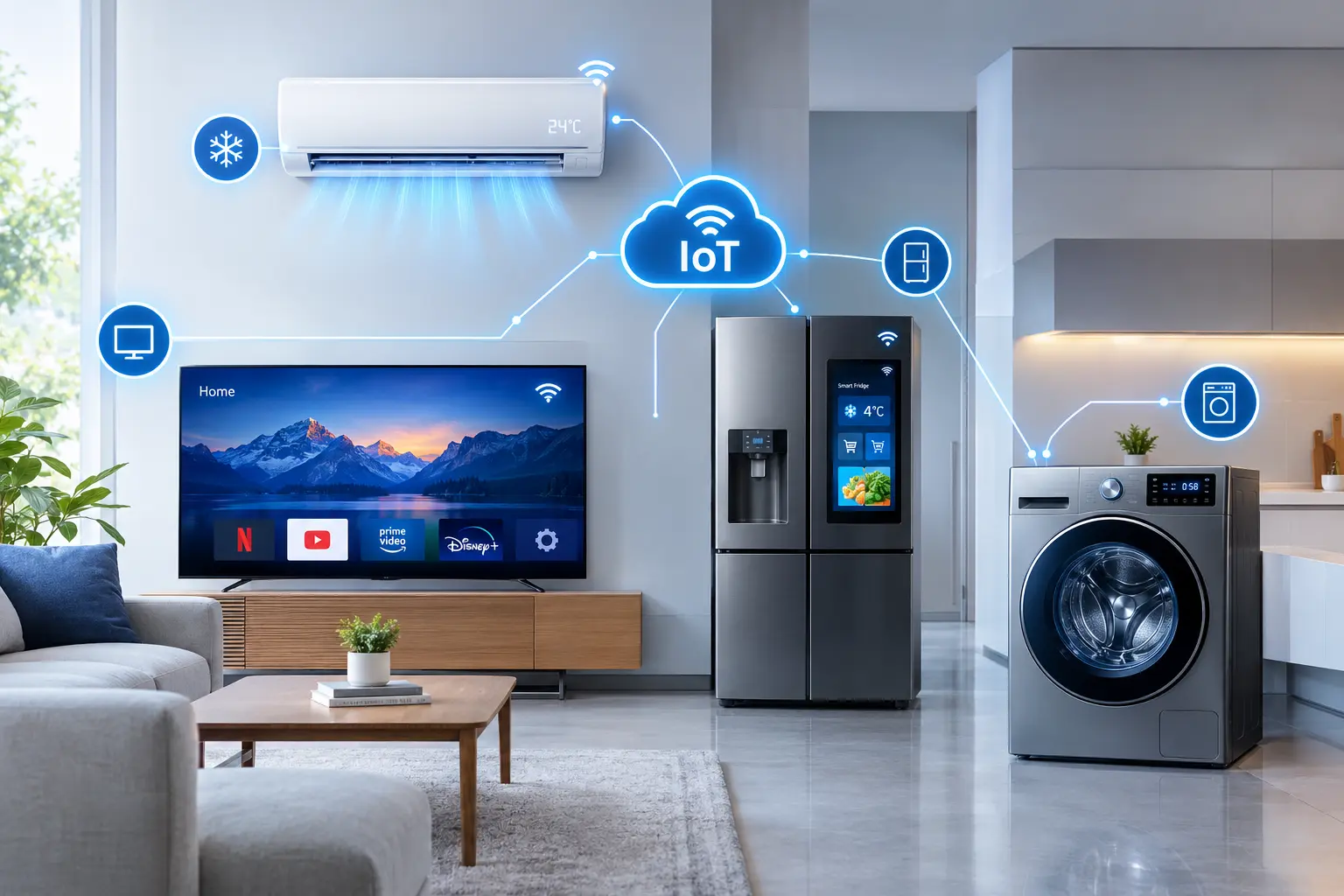
    The IoT (Internet of Things) is responsible for transforming home appliances by integrating computerized features and an array of modern applications. As a result, devices like televisions, air conditioners, and refrigerators are equipped with sensors that allow them to gather data, learn consumer patterns, and perform actions without manual intervention, thereby saving energy and preventing malfunctioning. 

    The statement mentioned above summarizes the essence of the transformation brought forth by the IoT. However, what remains to be answered is the question of “how”. The truth is that IoT modernizes household appliances in different ways, depending on the device that needs an upgrade. Let us analyze these devices separately, starting with television.

    TVs: From “Turn It On” to “It’s Already On For You” 

    Old way: One has to take three remote controls to determine which device is connected and then manually adjust brightness when the sun rises. 

    IoT way: 

    • One can use voice commands (for instance, “play Netflix”) and avoid searching through the menu of the device altogether. 
    • A sensor for ambient light will adjust parameters by itself from room to room. 
    • The television becomes a central unit for video doorbells or CCTV feeds. 

    Quick question: Does anybody need a special hub for the management of other devices?  

    The answer is no; current smart televisions operate on operating systems, for instance, Google TV, which is able to connect to the majority of other smart devices without the use of a hub.  

    ACs: From “Set a Timer” to “It Knows You’re Coming Home”

    Old way: You either leave the AC running all day to avoid a hot room, or walk into an oven because you forgot to switch it on.  

    IoT way:  

    • Geofencing makes the air conditioning turn on automatically when the phone gets within a certain distance of home.  
    • Inverter compressors enable the adjustment of power instantly instead of just shutting on and off.  
    • The app displays the device’s power usage, telling you the exact hours your compressor worked.  

    Quick question: Do IoT air conditioners help with electricity bills?  
    Yes, the inverter system acts much more economically than fixed-speed air conditioning of fixed speed when the compressor adjusts the power instead of just recharging.  

    Refrigerators: From “Guess What’s Inside” to “Check From the Store Aisle”

    Old way: You end up buying more milk even if you still have some and discovering the spoiled paneer after cooking.  

    IoT way:  

    • The internal cameras register the moment you close the door and send an alert when you need to know whether you still have food at home.  
    • Updating the shelf life of the goods by reading the barcode sends you a notification before the food spoils.  
    • Sensors warn you if the door is leaking or if you forgot to close it. 
       

    Quick question: Do smart fridges help in knowing when things are about to expire?  

    Yes, most of the models with barcode tracking or RFID technology send push notifications from one day to two days before the expiry date. 

    Washing Machines: From “Guess the Settings” to “It Weighs the Load For You” 

    Old method: You take a look at the importance of the load and guess detergent quantities and the fabric settings, hoping it does not ruin anything delicate. 

    IoTs method: 

    • Weighted sensors can determine the exact amount of water needed as well as detergent. 
    • You can program the cycle to get finished when you are entering your home, no more wet clothes waiting for several hours. 
    • Diagnostics show detected errors in the malfunctioning parts of the home appliances. 

    Quick question: Do IoTs use less water than traditional washing machines? Yes, as load-weight sensors can determine the water needed and its quality of it while the usual method uses fixed levels regardless of the load size. 

    Is It Actually Worth Upgrading?

    The old method of deciding: Buy the cheapest items and hope they’ll last as long as possible. 

    The IoT method of deciding: Find out the device that uses electricity for the longest period of time in your home, and upgrade that one (because this is the appliance that produces maximum savings on electricity and makes your life more comfortable). 
     

    The Bottom Line 

    IoT is not just adding another app to older appliances and computing what we mean by “using” these home appliances. Instead, it reduces uncertainty, helps save money, saves our efforts, and gives us more intelligent appliances that take care of themselves while we live our lives.  

    Would you like to take the plunge? Visit the store and see IoT in home appliances live and in action instead of putting off your smart home project till later.